

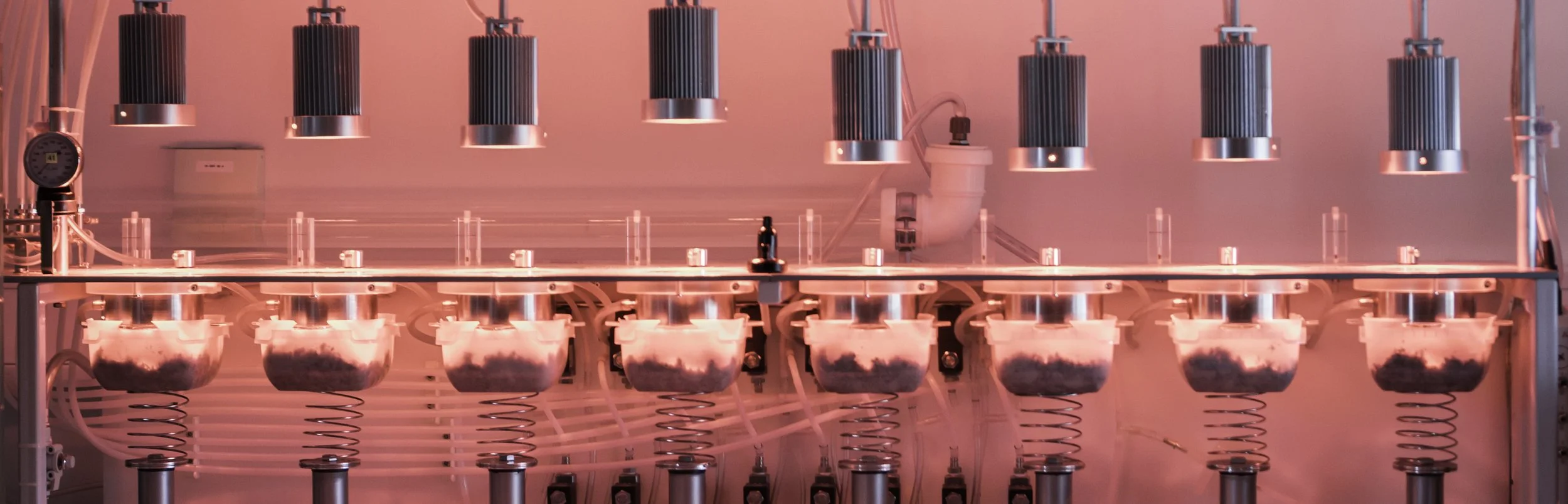
Jyrkki Multi-Cuvette Gas Exchange System
Parallel, non-destructive gas-exchange measurements for small plants
Jyrkki is an eight-chamber gas-exchange system designed for parallel, non-destructive measurements of small plants such as Arabidopsis thaliana. It measures whole-plant photosynthesis, transpiration and stomatal conductance while providing precise control over environmental conditions and experimental stimuli. By comparing up to eight intact plants within a single experiment, Jyrkki accelerates research workflows and produces directly comparable physiological data.

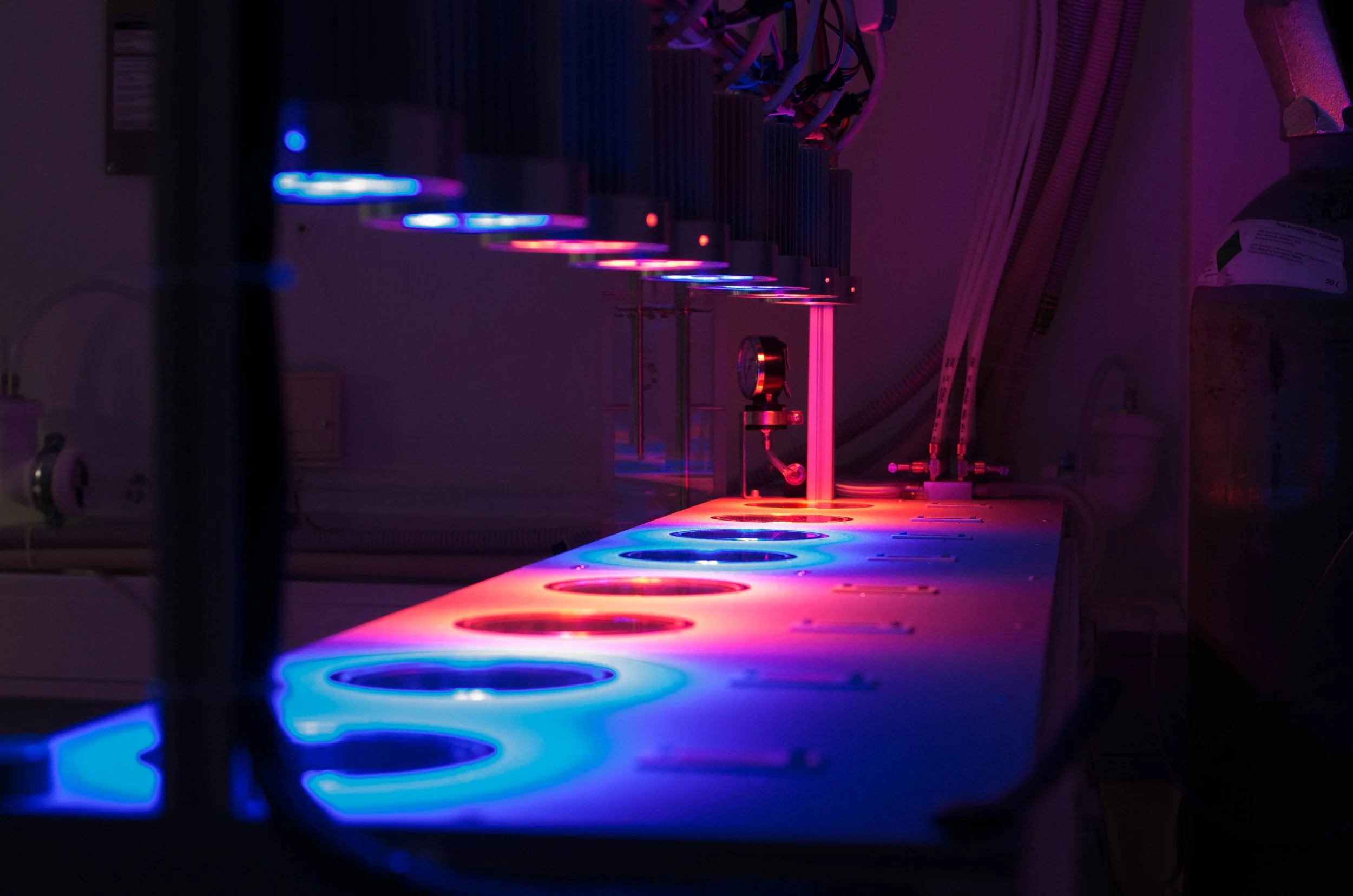


Details
Jyrkki is an eight-chamber gas-exchange system for parallel, non-destructive measurements of intact small plants, including Arabidopsis thaliana.
At a glance
Up to eight whole-rosette cuvettes measured in parallel
One-minute sampling per cuvette; eight-minute full measurement cycle
Directly comparable data under controlled conditions
Intact plants remain available for follow-up measurements
What Jyrkki measures
Net CO₂ exchange (photosynthesis, Anet)
Water-vapour exchange (transpiration, E)
Stomatal conductance (gs)
Environmental control and treatments
System-wide temperature and relative humidity / VPD
Per-cuvette CO₂, ozone, light intensity and spectral composition
Spray treatments, including hormones, chemicals and nanoparticles
How measurements work
Incoming air is split between reference and measurement lines. Jyrkki compares the air entering and leaving each cuvette to quantify CO₂ and water-vapour exchange, then calculates Anet, E and gs. Up to eight chambers are sampled sequentially in one eight-minute cycle.
System-wide environmental ranges
Relative humidity: 30–80%
Air temperature: 5–40 °C
Per-cuvette stimulus ranges
CO₂ concentration: 5–1,000 ppm
Ozone concentration: 10–1,500 ppb
White light: 0–1,000 µmol m⁻² s⁻¹
Red light: 0–1,200 µmol m⁻² s⁻¹
Blue light: 0–1,800 µmol m⁻² s⁻¹
Green light: 0–1,000 µmol m⁻² s⁻¹
Cuvette dimensions
77 mm wide × 36 mm high
Volume: 167.64 cm³
Sampling and airflow
1 minute per cuvette: 30 seconds reference + 30 seconds sample
Airflow rate: 20 mL s⁻¹
Measurement accuracy
CO₂: ±0.1 ppm
H₂O: ±0.1 ppm
Air temperature: ±0.1 °C
Ozone: ±10 ppb
Flow meter: 0.5 mL s⁻¹
Research applications
Genotype and mutant comparisons
Stomatal CO₂ and VPD signalling
Ozone and light-response experiments
Chemical, hormone and wounding treatments
Installation and support
System footprint: 2 × 1 m
Requires access to building ventilation
Custom pots, ozone upgrades and maintenance are available
Frequently asked questions
How many plants can Jyrkki measure?
Up to eight intact plants can be housed in independent whole-rosette cuvettes. The system samples each cuvette for one minute, completing a full cycle in eight minutes.
Which conditions are controlled independently?
CO₂, ozone and light can be applied per cuvette. Temperature and relative humidity are controlled across the full system.
Are the measurements destructive?
No. Plants grow in dedicated pots and are measured intact, allowing repeated measurements and follow-up analysis.
What does the system report?
CO₂ and water-vapour exchange are used to calculate net photosynthesis, transpiration and stomatal conductance.
What is required for installation?
The system occupies approximately 2 × 1 m and requires access to the building’s ventilation system. Contact Plant Invent to discuss configuration, delivery and installation.
Used in published plant research
Peer-reviewed studies have used eight-chamber Jyrkki systems to investigate rapid ozone responses, stomatal CO₂ signalling, ABA pathways and VPD responses in intact plants.